





Jensen Huang Nvidia history showcases the remarkable journey of a tech visionary who started from humble beginnings. From cleaning bathrooms at age nine to launching CUDA during a tough time for Nvidia, his story is inspiring.
The Early Life of Jensen Huang
Jensen Huang, the co-founder and CEO of Nvidia, has a remarkable story that traces back to his early life. Born in Taiwan in 1963, he moved to the United States at a young age, where he faced various challenges as an immigrant. From a young age, Huang demonstrated a strong work ethic; he was just nine years old when he took on the responsibility of cleaning bathrooms to help support his family.
Despite these early hardships, Huang excelled in his studies. He attended Oregon State University, where he earned his degree in electrical engineering. His passion for technology continued to grow, leading him to Stanford University for a master’s degree in the same field. It was during these formative years that he developed a vision for what would eventually become Nvidia.
In 1993, Huang co-founded Nvidia, setting the stage for a groundbreaking journey in the tech industry. However, it was not without its challenges. By 2006, Nvidia’s valuation had plunged, prompting Huang to launch CUDA, a parallel computing platform that revolutionized the way graphics processing units (GPUs) were used. This pivotal moment not only transformed Nvidia’s fortunes but also solidified Huang’s place in tech history as a visionary leader. His journey from a hardworking child to a tech titan exemplifies the essence of the Jensen Huang Nvidia history, showcasing resilience and innovation.
The Launch of CUDA
In 2006, as Nvidia faced a significant downturn, Jensen Huang introduced a groundbreaking technology that would change the landscape of computing: CUDA. This parallel computing platform and application programming interface (API) enabled developers to harness the power of Nvidia’s GPUs for general-purpose computing, marking a pivotal moment in the company’s history.
At a time when Nvidia’s valuation was in decline, the launch of CUDA represented not just a technical innovation but also a strategic shift in the company’s direction. Huang recognized the potential of leveraging graphics processing units beyond traditional graphics rendering. With CUDA, developers could accelerate their applications, allowing for faster computations in fields such as scientific research, artificial intelligence, and data analysis.
The introduction of CUDA also helped establish Nvidia as a leader in the emerging field of GPU computing. By opening up the architecture of their GPUs to developers, Huang fostered a vibrant ecosystem of applications built on Nvidia technology. This move not only revitalized Nvidia’s market position but also solidified Huang’s reputation as a visionary in the tech industry.
As the world increasingly turned to data-intensive applications, the impact of CUDA became evident. It paved the way for innovations and advancements, reinforcing the importance of Jensen Huang in Nvidia’s history and the broader tech landscape.
Challenges Faced by Nvidia in 2006
In 2006, Nvidia faced significant challenges that threatened its market position and overall valuation. After enjoying a period of rapid growth, the company found itself grappling with fierce competition and declining stock prices. Jensen Huang, Nvidia’s co-founder and CEO, had to navigate these turbulent waters while also pushing for innovation.
One of the most pressing issues was the rise of rival companies that were beginning to capture market share in the graphics processing unit (GPU) sector. Competitors like ATI Technologies, which was acquired by AMD, were aggressively improving their products, forcing Nvidia to rethink its strategies. As Huang worked to counter this competition, he recognized the need for Nvidia to differentiate itself significantly.
Another challenge was the increasing pressure to innovate in the rapidly evolving tech landscape. In response, Huang launched CUDA, a parallel computing platform that allowed developers to leverage Nvidia GPUs for general-purpose computing. This move not only enhanced Nvidia’s product offerings but also opened up new markets.
Despite the difficulties faced in 2006, Jensen Huang’s leadership and vision were instrumental in steering Nvidia towards a more promising future. The introduction of CUDA marked a pivotal moment in Nvidia’s history, showcasing Huang’s ability to transform challenges into opportunities for growth and innovation.
How Jensen Huang Transformed Nvidia
Jensen Huang’s journey with Nvidia is a testament to innovation and resilience. After launching CUDA in 2006, he not only revitalized the company’s fortunes but also reshaped the landscape of computing. CUDA, or Compute Unified Device Architecture, enabled developers to harness the power of Nvidia’s graphics processing units (GPUs) for general computing tasks. This breakthrough not only increased Nvidia’s valuation but also positioned the company as a leader in the field of parallel computing.
Under Huang’s leadership, Nvidia embarked on a series of strategic moves that solidified its dominance. Key initiatives included:
- Expansion into AI: Nvidia turned its focus towards artificial intelligence, developing GPUs that were specifically designed to handle the complexities of AI workloads.
- Acquisitions: The company strategically acquired firms to enhance its technology and broaden its market reach, such as the purchase of Mellanox Technologies in 2019.
- Gaming Innovations: Nvidia continued to push the envelope in gaming technology, introducing real-time ray tracing and DLSS, which set new standards for visual fidelity.
Huang’s vision and strategic decisions have not only transformed Nvidia but have also made him a pivotal figure in the tech industry. His ability to adapt and innovate has ensured that Jensen Huang’s Nvidia history remains a significant chapter in the evolution of modern computing.
The Impact of CUDA on Computing
The introduction of CUDA (Compute Unified Device Architecture) marked a significant turning point in the history of both Nvidia and its CEO, Jensen Huang. This revolutionary parallel computing platform enabled developers to harness the power of Nvidia GPUs for a wide range of applications beyond traditional graphics rendering. With CUDA, the potential of GPUs was unlocked for tasks in scientific computing, machine learning, and data analysis, effectively transforming the landscape of computing.
Before CUDA, programming for GPUs was often complex and limiting, primarily focused on graphics tasks. However, Jensen Huang’s vision for CUDA was to create a platform that made GPU computing accessible to a broader audience. By simplifying the programming model, CUDA allowed developers to leverage the massive parallel processing power of GPUs without needing extensive knowledge of hardware.
As a result, CUDA not only boosted Nvidia’s product offerings but also catalyzed the growth of an entire industry centered around GPU computing. Companies and researchers began to adopt CUDA for projects in artificial intelligence, physics simulations, and deep learning, solidifying Nvidia’s position as a leader in the field. Today, Jensen Huang’s legacy is closely tied to the success of CUDA, which remains pivotal in shaping modern computing and continues to drive innovation in various sectors.
Nvidia’s Growth Over the Years
Nvidia has experienced remarkable growth over the years, largely attributed to the visionary leadership of Jensen Huang. Since its founding in 1993, the company has transitioned from a small graphics chip manufacturer to a dominant force in the tech industry. Under Huang’s guidance, Nvidia evolved its product offerings, expanding beyond traditional gaming GPUs into areas such as artificial intelligence, deep learning, and data center solutions.
In the early 2000s, Nvidia faced significant challenges, including fierce competition and market fluctuations. However, the introduction of CUDA in 2006 marked a turning point, allowing developers to leverage the power of GPUs for parallel computing. This innovation not only revitalized Nvidia’s fortunes but also set the stage for its future growth.
Throughout the 2010s, Nvidia capitalized on the rise of machine learning and AI, positioning itself as a leader in these fields. The company saw exponential increases in revenue and market valuation, particularly with the boom in gaming and cryptocurrency mining.
As of 2023, Nvidia’s market capitalization has soared, reflecting the effectiveness of Huang’s strategies and the company’s adaptability. Today, Jensen Huang’s vision continues to drive Nvidia’s innovations, solidifying its status as a global tech powerhouse.
Lessons from Jensen Huang’s Journey
Jensen Huang’s journey is filled with valuable lessons that resonate beyond the tech industry. His experiences serve as a testament to the power of resilience, innovation, and visionary leadership.
One of the most significant lessons from Huang’s path is the importance of adaptability. When Nvidia faced challenges in 2006, he did not shy away from transforming the company’s direction. Instead, he embraced change, launching CUDA, which revolutionized how developers utilized graphics processing units (GPUs). This move not only saved Nvidia but also solidified its position as a leader in computing technology.
Another key takeaway is the value of persistence. Huang’s early life, marked by hard work and determination, laid the foundation for his later successes. From cleaning bathrooms at a young age to becoming a prominent figure in tech, his journey illustrates the importance of dedication and a strong work ethic.
Moreover, Huang’s vision emphasizes the need for a long-term perspective. He consistently invested in research and development, understanding that innovation is crucial for sustainability in a rapidly changing market.
In summary, Jensen Huang’s story is not just about the rise of Nvidia; it highlights essential lessons in adaptability, persistence, and vision that can inspire future generations of leaders and innovators.
Future Prospects for Nvidia
As Nvidia continues to innovate and expand its influence in the tech industry, the future prospects for the company look promising. Under the leadership of Jensen Huang, Nvidia has established itself as a powerhouse in graphics processing and artificial intelligence. The firm’s commitment to research and development has positioned it at the forefront of emerging technologies, particularly in the realms of AI and deep learning.
Analysts predict that Nvidia will maintain its growth trajectory, driven by increasing demand for its GPUs in various sectors, including gaming, data centers, and autonomous vehicles. With the rise of generative AI, Nvidia’s products are vital for training complex models, ensuring the company remains a leader in this rapidly evolving market.
Moreover, Jensen Huang’s vision for the future includes expanding Nvidia’s presence in cloud computing and edge AI, areas that are expected to see exponential growth. The company’s recent investments in AI infrastructure and partnerships with major tech firms enhance its competitive edge.
However, challenges remain, such as competition from other tech giants and fluctuations in the semiconductor market. Nevertheless, with Jensen Huang at the helm and a legacy built on innovation, Nvidia’s history suggests it is well-equipped to navigate these hurdles and capitalize on new opportunities.
As the landscape of technology evolves, the story of Jensen Huang and Nvidia will undoubtedly continue to unfold, marking significant milestones in the industry.
The journey of Jensen Huang Nvidia history is marked by innovation and resilience, shaping the landscape of the tech industry. As we delve deeper into Jensen Huang Nvidia history, we uncover the pivotal moments that defined his leadership and vision for the company.
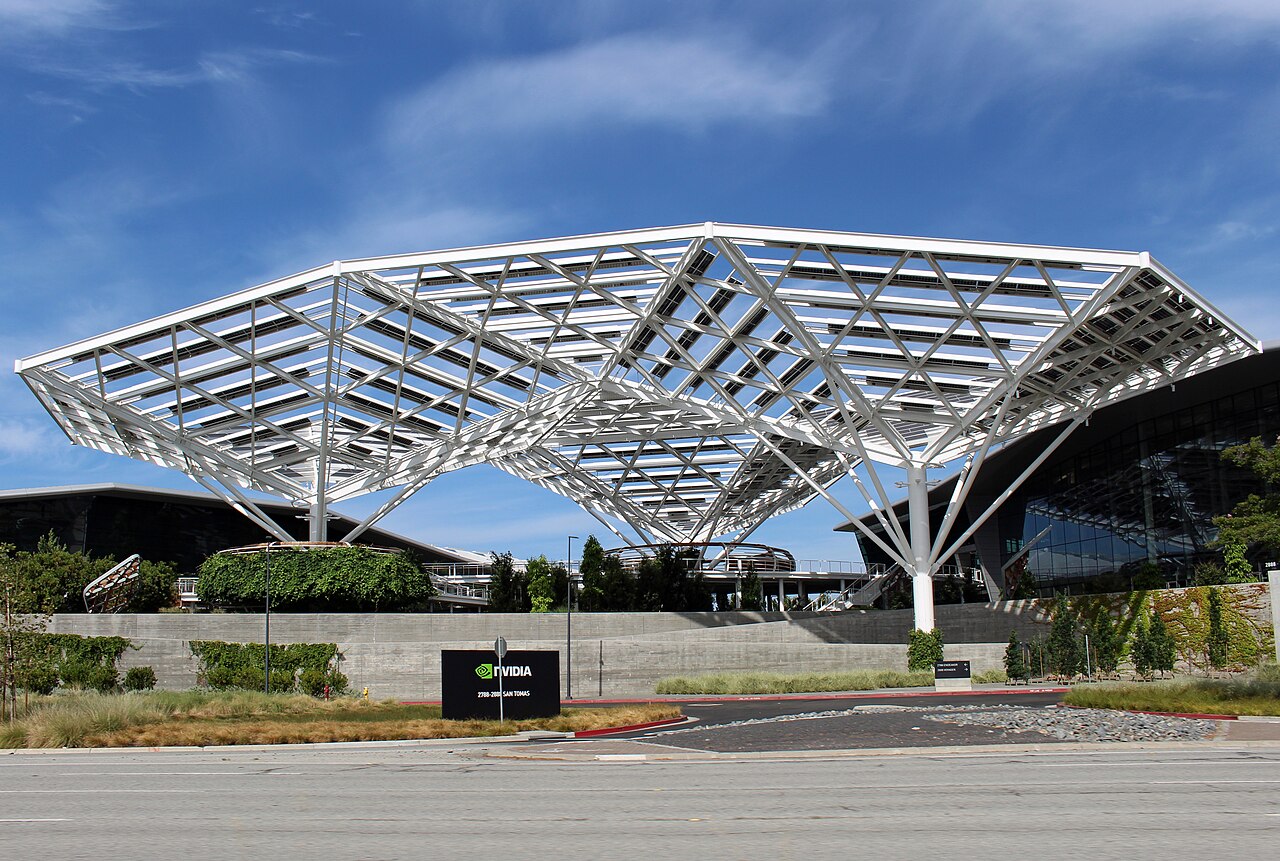
via Wikimedia Commons